4.6BarkScore
For service dog work
The listing doesn’t say how they train, so it’s worth asking. We’ve asked about their service dog work, and their answers will show here.
Looking from the UK? We list 1,819 dog trainers there too, with postcode search.
Service dog training teaches a dog specific tasks that help a person with a disability. Here are the eight trainers we list in New Jersey who say they train service dogs, each labeled by how they train, so you can see their approach before you get in touch.
Where would you like to start?
Trainers are ranked by member recommendations, then BarkScore. The BarkScore rates each trainer from 0 to 5, mostly on training methods and reputation. How we score
4.6BarkScore
The listing doesn’t say how they train, so it’s worth asking. We’ve asked about their service dog work, and their answers will show here.
4.1BarkScore
Trains force-free, with private lessons, visits to your home and group classes. We’ve asked about their service dog work, and their answers will show here.
4.1BarkScore
Trains force-free, with private lessons. We’ve asked about their service dog work, and their answers will show here.
3.9BarkScore
Trains force-free, with group classes. We’ve asked about their service dog work, and their answers will show here.
3.5BarkScore
Offers group classes. The listing doesn’t say how they train, so it’s worth asking. We’ve asked about their service dog work, and their answers will show here.
3.5BarkScore
Offers private lessons, group classes and online sessions. The listing doesn’t say how they train, so it’s worth asking. We’ve asked about their service dog work, and their answers will show here.
3.5BarkScore
Offers private lessons, visits to your home and group classes. The listing doesn’t say how they train, so it’s worth asking. We’ve asked about their service dog work, and their answers will show here.
3.4BarkScore
Offers private lessons. The listing doesn’t say how they train, so it’s worth asking. We’ve asked about their service dog work, and their answers will show here.
The BarkScore tells you how a trainer trains in general. The Specialist Score sits beside it and looks at their service dog work, where the stakes are higher. Both run from 0 to 5.
Checked answers count in full, and answers we haven’t been able to check yet count for half, so a trainer’s score grows as we confirm what they’ve told us. Featured trainers are scored the same way as everyone else.
Below that, a card lists what the trainer has told us without a grade.
How many handler and dog teams they’ve seen through to the end of training, time spent at a program accredited by Assistance Dogs International (ADI), and the needs they train for.
Testing public access against a published standard, such as ADI’s test, a written task training plan, assessing the dog before training starts, and follow-up support afterwards.
How the trainer trains, as in the BarkScore, plus a written plan for a dog who doesn’t suit the work and checks on how working dogs are coping.
Recognized training credentials, such as CPDT-KA or KPA-CTP, which we check on each organization’s own directory.
Published costs, a written contract, a complaints procedure, and selling no certificates or registrations, which the law doesn’t require.
Every listing says how the trainer trains, so you can see their approach before you get in touch. It’s worth asking what happens in a session when a dog gets something wrong.
We don’t list trainers whose training is built around an electronic (shock) collar.
Rewards and positive reinforcement, without prong, choke or shock collars.
The listing doesn’t say how they train, so it’s worth asking.
It depends on the route. Our listed trainers don’t publish their prices yet, so it’s worth asking each trainer early. Programs vary widely: some are free to the person who receives the dog, and others charge fees or ask them to fundraise.
Under the ADA, they’re different. A service dog is trained to do specific tasks for a person with a disability, while an emotional support animal helps by being there. Some state laws and housing rules treat emotional support animals differently.
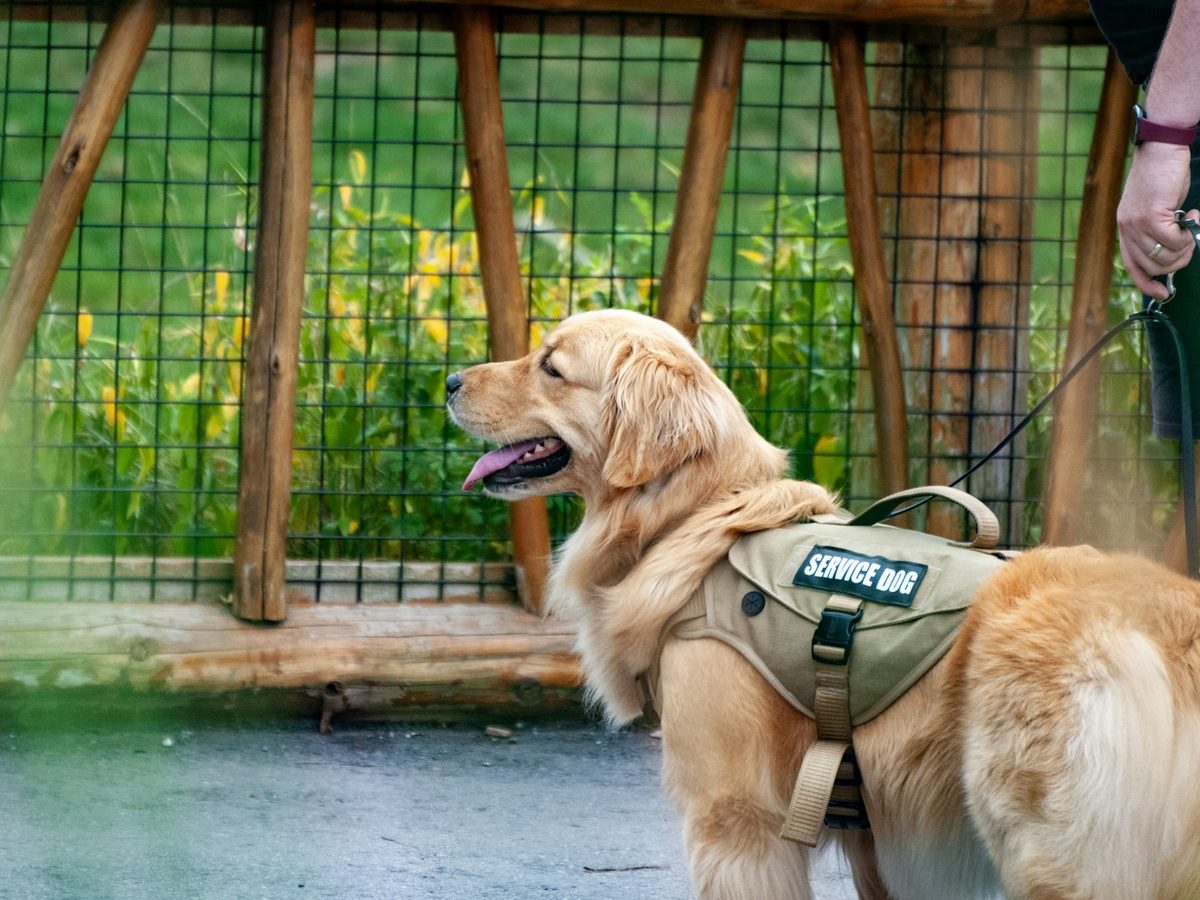
A vest is optional. It can help other people see that your dog is working. The ADA doesn’t require a service dog to wear a vest, an ID tag or a particular harness.
Yes. The ADA doesn’t restrict which breeds can be service dogs, and cities that ban certain breeds must make an exception for a service dog unless that particular dog is a direct threat to others. What matters most is the individual dog’s temperament, health and enjoyment of the work, which a trainer can help you assess.
By member recommendations and the BarkScore. Once trainers tell us about their service dog work, their Specialist Score shows too. Featured trainers pay to appear in the labeled Sponsored section, and that never changes their scores or the order of the list.
The forum is ready for its first question about service dogs. Handlers and trainers are happy to share what helped them.
Ask a question