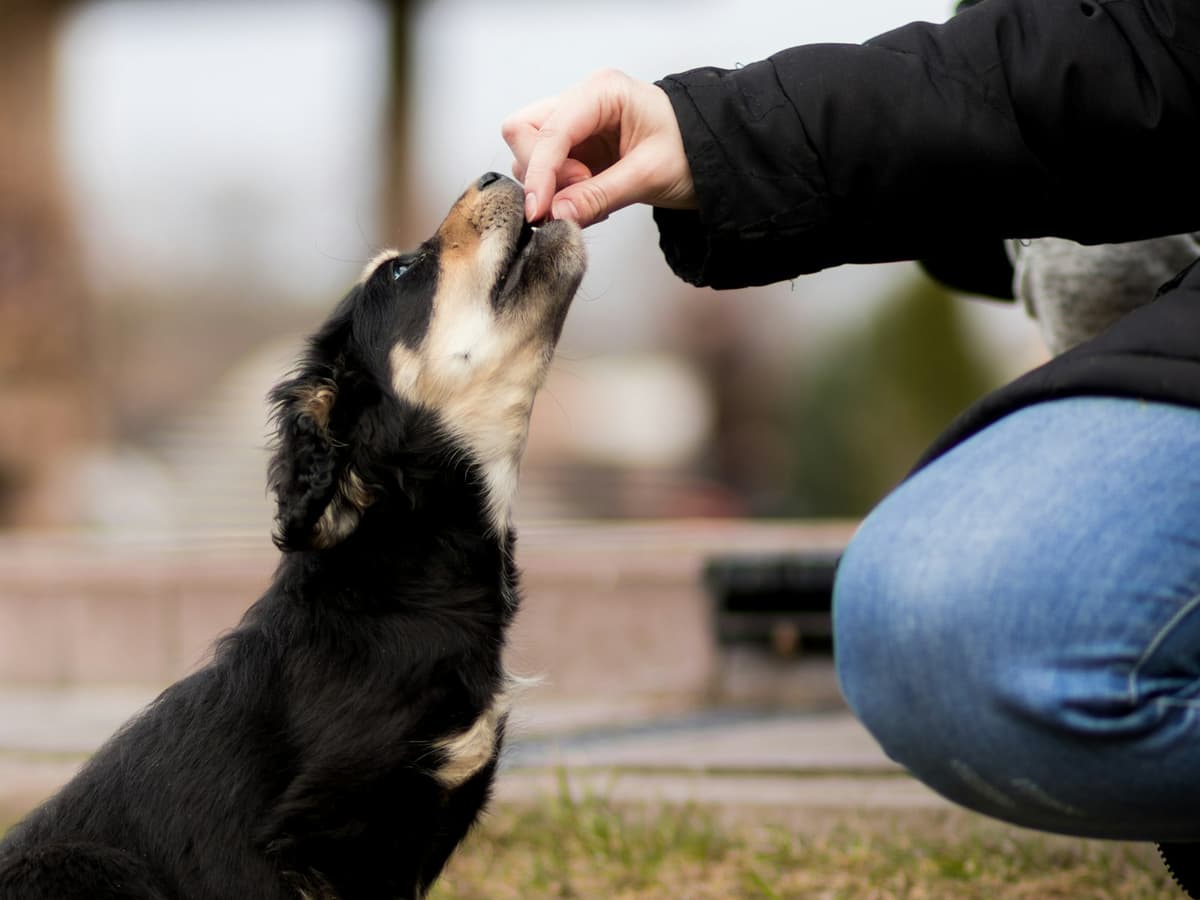
Positive reinforcement training rewards your dog for the things you’d like them to do more often, with food, play or praise. Good choices pay off, so your dog is keen to make them again. Every trainer here describes their training this way, and each one is labeled by how they train, so you can see their approach before you get in touch.
1,815are labeled force-free, training with rewards and no aversive tools
82%offer private lessons, where the trainer works with you and your dog alone
94are Karen Pryor Academy certified training partners, a reward-based, clicker-based program
Knowing what to look for makes it easier to ask each trainer about it.
1
Good behavior earns a reward
Your dog gets something they value, like a treat, a game or praise, when they do what you’ve asked. That makes them keen to do it again.
2
It’s what vets’ behavior experts recommend
The American Veterinary Society of Animal Behavior recommends reward-based training, and warns that aversive methods can harm a dog’s welfare.
3
Hard steps are made smaller
If your dog finds something difficult, the trainer breaks it into smaller steps, so your dog can get it right and earn a reward.
Top rated positive reinforcement dog trainers in the US
Trainers are ranked by member recommendations, then BarkScore. The BarkScore rates each trainer from 0 to 5, mostly on training methods and reputation. How we score
Runs group classes and private lessons, plus visits to your home and board and train. They’re a Karen Pryor Academy certified training partner. They help with recall, leash walking and everyday manners.
How you can train
In your home, Private lessons, Board and train, Group classes
Helps with
Basic obedience, Recall, Leash pulling, AKC Canine Good Citizen, Service dog work
Runs group classes and private lessons. They’re a Karen Pryor Academy certified training partner. They help with recall, leash walking and everyday manners.
How you can train
Private lessons, Group classes
Helps with
Puppy training, Agility, Basic obedience, Recall, Leash pulling and 1 more
Offers private lessons, plus day school and board and train. They’re a Karen Pryor Academy certified training partner. They help with recall, leash walking and reactivity.
How you can train
Board and train, Private lessons, Day school, Online
Helps with
Basic obedience, Recall, Leash pulling, Puppy training, Aggression and 2 more
A few words come up often in reward-based classes. Here’s what they mean.
1
A marker
A click, or a word like “yes”, that tells your dog the exact moment they got it right.
2
A reward
Food, play or praise that your dog values, given straight after the marker.
3
Luring
Guiding your dog into a position with a treat, then fading the treat out.
4
Shaping
Rewarding small steps toward a bigger behavior.
5
Force-free
Rewards and positive reinforcement, without prong, choke or shock collars.
Positive reinforcement dog trainers in the US, by the numbers
82%
offer private lessons, which focus on your dog and your home
68%
run group classes, where dogs learn around distractions
17%
can come to your home
20%
can train with you online by video call
What these trainers help with
Reward-based trainers help with first manners and bigger worries alike.
Recall1,656
Leash pulling1,663
Puppy training1,421
Reactivity513
Fear347
Counted from all 1,841 listed trainers on this page, from what their listings say. Credentials are self-reported.
How these trainers work
How these trainers describe their methods
Every trainer on this page describes their training as positive reinforcement, and nearly all are labeled force-free on their listing. Trainers who describe balanced methods are left off this page, as their training includes corrections as well as rewards.
We don’t list trainers whose training is built around an electronic (shock) collar.
1,815
Force-free
Rewards and positive reinforcement, without prong, choke or shock collars.
26
Method not stated
The listing doesn’t say how they train. Ask what happens when a dog gets something wrong; their answer tells you more than any label.
Owners talking about it
Questions from the forum, answered by owners and trainers.
We’d like to use Google Analytics to see which pages people read. It sets cookies, so it only runs if you say yes. The site works the same either way. How we use it