
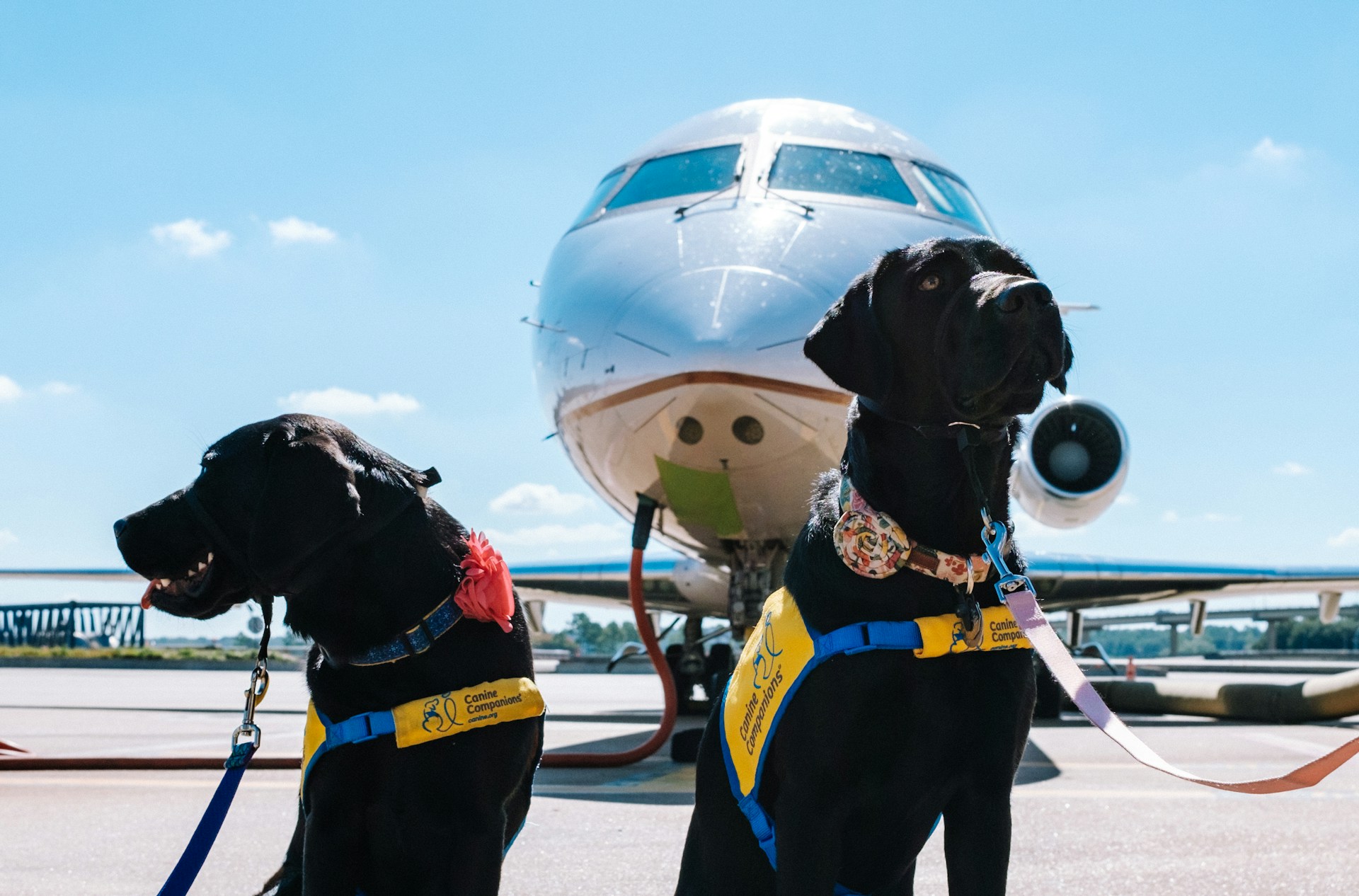

Dreaming of a vacation with your beloved furry friend by your side? The good news is, flying with your dog in the airplane cabin is often possible! However, it’s not as simple as booking a human ticket. This comprehensive guide will walk you through everything you need to know, from finding airlines that allow dogs in the cabin to preparing for a smooth journey, with specific insights for both USA and UK/European travel.
Is Your Dog Allowed in the Cabin?
The first and most crucial step is to determine if your dog qualifies for in-cabin travel. Generally, airlines have strict rules regarding size and weight, as your dog must fit comfortably in a carrier that can be stowed under the seat in front of you.
- Size and Weight Limits: This is the biggest hurdle. Most airlines, particularly those in Europe, have a combined weight limit for your dog and its carrier, often around 8 kg (17.6 lbs), though some may go up to 10 kg (22 lbs) or slightly more. In the USA, some airlines are more flexible, with certain carriers allowing combined weights up to 20 lbs (9.07 kg) or even 40 lbs.
- Carrier Requirements: Your dog’s carrier must be:
- Soft-sided and leak-proof: This allows for some flexibility to fit under the seat.
- Well-ventilated: With mesh on at least three sides.
- Large enough for your dog to stand up, turn around, and lie down comfortably: Without any part of them touching the top or sides.
- Specific dimensions: Each airline will have precise maximum dimensions for carriers. Always check their website!
- Age Requirements: Puppies usually need to be at least 10-15 weeks old and fully weaned to fly.
- Breed Restrictions: Some airlines may have restrictions on certain “snub-nosed” (brachycephalic) breeds due to potential breathing difficulties during flight.
Important Note on “Large Dogs in Cabin”: While some private charter services (like Bark Air or K9 Jets) cater specifically to larger dogs in the cabin, on commercial flights, the term “large dogs in cabin” almost exclusively refers to service animals. For pets, if your dog exceeds the in-cabin weight and size limits, they will likely need to travel as cargo, which involves a completely different set of regulations and considerations. The UK, in particular, has very strict rules and generally does not allow pets in the cabin on commercial flights unless they are assistance dogs.
Airlines That Allow Dogs in the Cabin
The landscape of pet travel policies differs significantly between the USA and the UK/Europe.
Flying with a Dog in the Cabin: USA Airlines
US airlines tend to be more accommodating for in-cabin pet travel on domestic routes. Here are some of the major players and what to expect:
- American Airlines: Allows cats and dogs in the cabin. Weight limits vary by aircraft, but typically around 20 lbs (9.07 kg) combined pet and carrier. Not permitted on trans-Atlantic trips as carry-on.
- Delta Air Lines: A popular choice for pet owners. Your pet must be small enough to fit comfortably under the seat. No stated weight limit, but the carrier must fit.
- Southwest Airlines: Allows small, vaccinated domestic cats and dogs. Generally, one pet carrier per reservation, with up to two small pets of the same species per carrier. Not allowed on international flights or flights to/from Hawaii.
- United Airlines: Allows dogs and cats in the cabin. No weight or breed limitations for pets explicitly stated, but they must fit comfortably in the carrier under the seat.
- Alaska Airlines: Allows dogs, cats, rabbits, and household birds. They have one of the more pet-friendly policies, with limits on the number of pets per cabin class.
- JetBlue: Offers a “JetPaws” program. Allows small dogs and cats up to 20 lbs (combined pet and carrier).
- Frontier Airlines: Allows dogs, cats, hamsters, rabbits, guinea pigs, and household birds. No pets allowed in cargo, meaning larger dogs cannot fly Frontier.
- Spirit Airlines: Allows dogs, cats, household birds, and domestic rabbits, with a combined weight limit up to 40 lbs.
Key USA Takeaway: Always check the specific aircraft you’ll be flying on, as under-seat dimensions can vary. Book early, as there’s usually a limit to the number of pets allowed per flight.
Flying with a Dog in the Cabin: UK & Europe Airlines
This is where it gets a bit trickier, especially for the UK.
- United Kingdom (UK):
- Commercial flights to/from the UK generally DO NOT allow pets in the cabin, with the sole exception of recognised assistance dogs.
- This means if you’re flying commercially to or from the UK with your pet, they will almost certainly need to travel as manifest cargo.
- Some European airlines operating from the UK to the EU might permit in-cabin travel for small pets (see below), but if your final destination is the UK, your pet will still need to meet UK import regulations, which typically involve cargo.
- Private pet charter flights are an option for those wanting their pets in the cabin for UK travel, but these are significantly more expensive.
- Europe (Continental): Many European airlines are pet-friendly for in-cabin travel, typically adhering to the 8 kg (17.6 lbs) combined weight limit for pet and carrier.
- KLM Royal Dutch Airlines: Allows one small cat or dog per passenger in the cabin (up to 8 kg/17.6 lbs).
- Air France: Permits cats and small dogs in the cabin (up to 8 kg/17.6 lbs).
- Lufthansa: Allows small dogs and cats in the cabin (up to 8 kg/17.6 lbs).
- Iberia: Pets allowed in the cabin on most flights (up to 8 kg/17.6 lbs).
- Austrian Airlines: Allows small cats and dogs in the cabin (up to 8 kg/17.6 lbs).
- Finnair: Small pets (cats, dogs, rabbits) can travel in the cabin (up to 8 kg combined).
- SAS Scandinavian Airlines: Allows small pets in the cabin (up to 8 kg combined).
- TAP Air Portugal: Allows small pets in the cabin (up to 8 kg combined).
- Vueling: A budget airline that permits small pets in the cabin on select routes (often up to 8 kg/17.6 lbs).
- Volotea: Allows dogs in the cabin up to 10 kg (22 lbs) including the carrier.
Key UK/Europe Takeaway: If traveling to or from the UK, prepare for cargo travel for your pet unless it’s a service animal or you opt for a private charter. For travel within mainland Europe, many airlines offer in-cabin options for small pets, but the weight limits are generally stricter than in the USA.
Essential Pre-Flight Preparations: How to Fly with Your Dog
Once you’ve identified a suitable airline, the real preparation begins!
- Vet Visit & Health Documentation:
- Health Certificate: This is non-negotiable for most airlines and international travel. It must be issued by a licensed veterinarian (often USDA-accredited for US exports) within a specific timeframe (usually 10 days) of your flight.
- Vaccinations: Ensure all vaccinations, especially rabies, are up-to-date. For international travel, specific waiting periods after rabies vaccination often apply (e.g., 21 days for the UK).
- Microchip: Your dog must have an ISO-compliant microchip. For UK/EU travel, the microchip must be implanted before the rabies vaccination.
- EU Pet Passport/Animal Health Certificate (AHC): For travel to and within the EU from a non-EU country (like the USA or UK post-Brexit), an Animal Health Certificate (AHC) is required. If you’re an EU resident, your pet will need an EU Pet Passport.
- Tapeworm Treatment (for UK entry): If entering the UK, your dog will need tapeworm treatment administered by a vet between 24 and 120 hours before arrival.
- Research Destination-Specific Rules: Every country has unique import regulations. Check the official government websites of your destination (e.g., USDA APHIS for US imports, DEFRA for UK imports) well in advance.
- Carrier Acclimation: Start training your dog to be comfortable and happy in their carrier weeks or even months before your flight.
- Make it a positive space with treats, toys, and familiar bedding.
- Gradually increase the time they spend inside, including closing the door.
- Booking Your “Dog Plane Ticket”:
- Book Early: Space for in-cabin pets is limited. Contact the airline directly to reserve a spot for your dog as soon as your human tickets are confirmed. Do not assume you can just show up with your pet.
- Pay the Fee: Airlines charge a fee for in-cabin pets, typically per one-way segment.
- Pre-Flight Day Prep:
- Exercise: Give your dog plenty of exercise before heading to the airport to help them relax during the flight.
- Limit Food and Water: Offer a light meal a few hours before the flight, and limit water intake right before and during the flight to minimize the chance of accidents.
- Potty Break: Take your dog to a designated pet relief area at the airport before boarding.
- No Sedation: Most airlines and veterinarians advise against sedating pets for air travel, as it can interfere with their ability to regulate body temperature and breathing at altitude. Consult your vet for natural calming alternatives if needed.
- At the Airport and Onboard:
- Check-in: Arrive early for check-in, as pet procedures can take extra time.
- Remain in Carrier: Your dog must stay in their carrier, under the seat in front of you, for the entire duration of the flight. This is a non-negotiable safety rule.
- Stay Calm: Your dog picks up on your emotions. Stay calm and reassuring to help them feel secure.
How to Fly with a Large Dog (Beyond Cabin Limits)
As mentioned, on commercial flights, if your dog is too large for in-cabin travel, they will need to travel in the cargo hold. This is a more complex process and requires careful consideration:
- Cargo vs. Checked Baggage: Most airlines transport pets as manifest cargo, handled by their dedicated cargo division. Some regional airlines might allow them as “checked baggage” on certain domestic routes.
- Temperature and Pressure Controlled: Reputable airlines ensure the cargo hold for live animals is temperature and pressure-controlled, similar to the passenger cabin.
- Specific Crate Requirements: Cargo crates are much more rigid and have stringent specifications (IATA standards) regarding size, ventilation, labeling, and water/food bowls.
- Health Checks: Additional health checks and sometimes acclimation certificates may be required.
- Breed Restrictions: Snub-nosed breeds and certain “dangerous” breeds are often prohibited from cargo travel.
- Seasonal Restrictions: Many airlines have embargoes on pet travel in cargo during extreme hot or cold weather.
While flying with a large dog in cargo is a viable option for many, it’s essential to understand the inherent risks and stress involved for your pet. Always discuss this thoroughly with your veterinarian and an experienced pet transport company.
Flying with your dog in the cabin can be a wonderful experience, allowing you to share adventures with your best friend. The key is meticulous planning and understanding the specific rules for your chosen airline and destination. Start your research early, consult with your vet, and prepare your dog for the journey, and you’ll be well on your way to happy travels together!