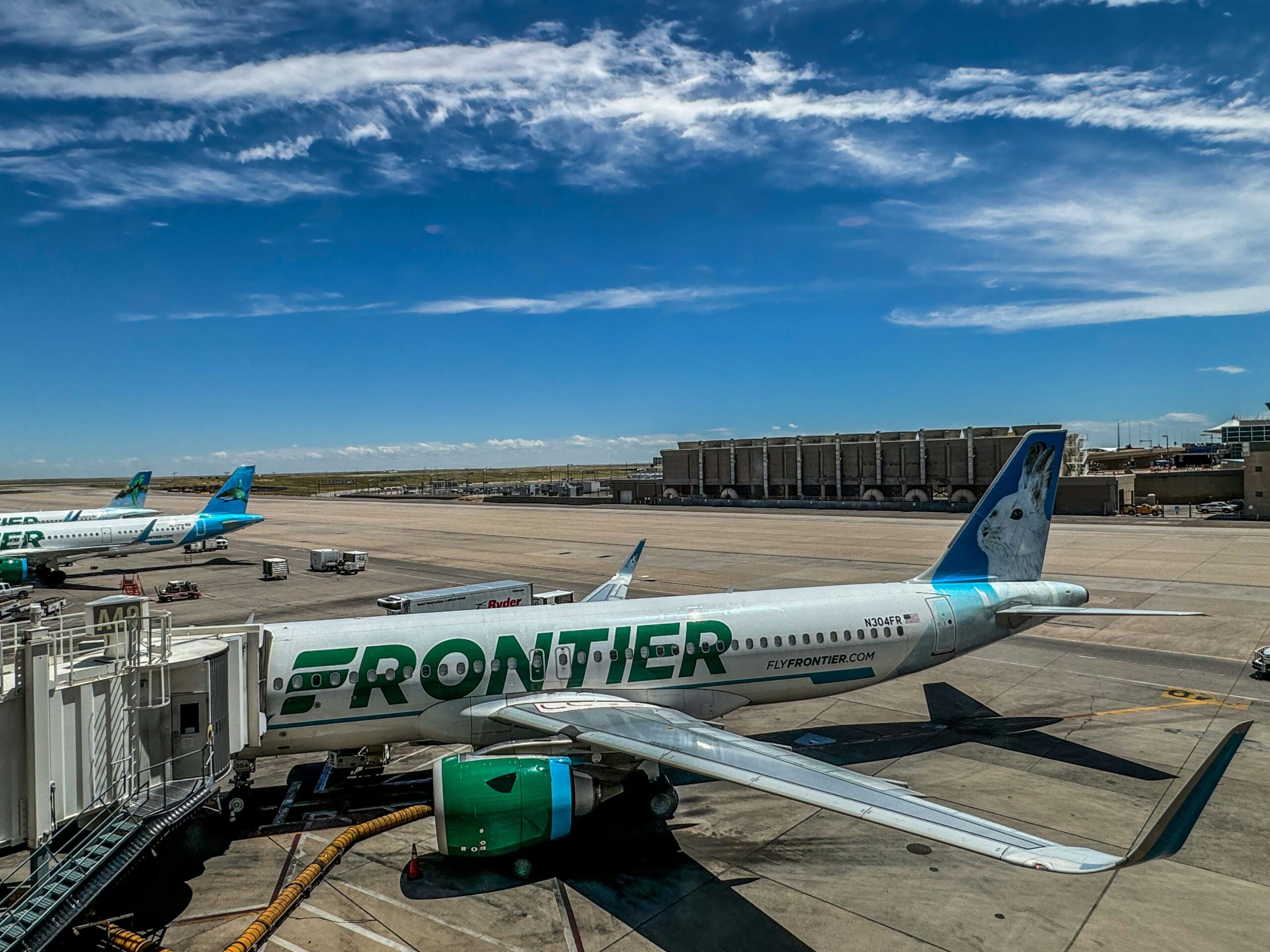
Frontier Airlines Pet Policy: 2025

Frontier Airlines offers a straightforward approach to pet travel: your small, domesticated pet can join you in the cabin on most flights. It’s crucial to note that Frontier Airlines does NOT allow pets to be checked as baggage or transported via cargo. All pet travel, aside from trained service animals, must be in the cabin.

Understanding our specific policies is key to a smooth journey for you and your cherished companion.


Can My Pet Fly in the Cabin on Frontier Airlines? (Carry-On Pets)

Yes, small, domesticated pets are welcome to travel with you in the cabin on most Frontier Airlines flights.

Here’s what you need to know:

  • Allowed Animals: Frontier Airlines is quite accommodating for domestic flights, allowing domesticated dogs, cats, rabbits, guinea pigs, hamsters, and small household birds in the cabin.
    • International Flights: For international flights (to/from the Dominican Republic and Mexico), only domesticated dogs and cats are permitted.
    • Not Allowed: Large birds (e.g., parrots, macaws), rodents (including mice, rats, squirrels), beavers, ferrets, reptiles (including snakes), amphibians, spiders, and insects are never accepted.
  • Pet Age: Pets must be at least 8 weeks old to travel.
  • Size & Carrier Fit: Your pet must be able to stand, turn around, and lie down naturally in a leak-proof and well-ventilated carrier that fits entirely under the seat directly in front of you.
    • Hard-Sided Carrier Maximum Dimensions: 18″ L x 14″ W x 8″ H.
    • Soft-Sided Carrier Maximum Dimensions: 18″ L x 14″ W x 11″ H.
    • Recommendation: Soft-sided carriers are recommended as they are more flexible to fit under the seat.
  • How Many Pets? Generally, only one adult dog or cat is allowed per container. You may bring one pet carrier per passenger.
  • Limits Per Flight: While not explicitly stated with a specific number of pets per flight, space for pets in the cabin is limited and reservations are on a first-come, first-served basis.
  • Where Can I Sit? If you’re flying with a pet in the cabin, you cannot sit in:
    • Row one.
    • An emergency exit row.
    • Certain seats may not accommodate your pet container, but Frontier will work to get you a suitable seat assignment.
  • During the Flight: Your pet must always remain inside its travel container (with the door secured) while at the airport gate area and onboard the aircraft. You should not provide food or water to your pet during the flight due to potential discomfort. No oxygen will be administered to a pet in the event of an emergency. Your pet needs to be harmless, not disruptive, odorless, and should require no extra attention during flight.
  • Booking Your Pet’s Spot: You can add a pet:
    • During booking by selecting “Cabin Pet” in the Passenger Info section.
    • After booking by visiting “Manage Trip” and selecting “Add Pet in Cabin.” It’s advisable to add your pet to your reservation as early as possible due to limited space.
  • What Does it Cost? The pet fee is collected for a one-way flight segment.
    • Standard Fee: $99 USD per pet, each way. This fee can be paid in advance during booking or at the airport when you check in your pet.
  • Pet Carrier Counts as Carry-on: Your pet carrier is considered a personal item or a carry-on bag. You are allowed to bring one personal item OR a carry-on bag in addition to your pet carrier (note that carry-on bag fees apply separately).

Can My Larger Pet Travel via Frontier Airlines Cargo or as Checked Baggage?

No. Frontier Airlines does NOT accept pets as checked baggage or via its cargo service. If your pet is too large to fit comfortably under the seat in a compliant in-cabin carrier, you will need to find an alternative mode of transportation or another airline that offers cargo or checked pet services.


What Health Documents Do I Need for Pet Travel on Frontier Airlines? (All Pets)

Health documentation requirements on Frontier Airlines vary based on your destination.

  • For Domestic Travel (within the U.S. Mainland):
    • Frontier Airlines does not require a health certificate for pets carried in the cabin for travel within the U.S.
    • However, upon arrival, a health certificate may be required by the specific state or territory you are landing in. It is your responsibility to contact your veterinarian or consult the U.S. Department of Agriculture’s Veterinary Services for state-specific requirements.
  • For International Travel (to/from Dominican Republic and Mexico) and Puerto Rico:
    • A health certificate from a licensed veterinarian is required. The health certificate must be dated based on the country of entry:
      • Puerto Rico: Within 30 days of entry.
      • U.S. (from international): Within 10 days of entry.
      • Dominican Republic: Within 15 days of entry.
      • Mexico: Within 5 days of entry.
    • The health certificate must include:
      • Personal information (owner’s name, address).
      • Species of your pet.
      • Country of origin.
      • A statement that the pet did not originate from an area quarantined for rabies (for some destinations).
      • Signed by an accredited veterinarian.
    • Rabies Vaccination: Immunization against rabies within 12 months is required for adult pets 3 months of age or older for all international destinations. The immunization must be administered no more than one year and no less than 30 days prior to international travel. If a booster was given less than 30 days prior, proof of the prior rabies shot is required.
    • Other Vaccinations: Recommended vaccinations include hepatitis, PIP, and leptospirosis.
    • External Parasite Treatment: For some destinations, treatment for external parasites within 72 hours prior to entry must be stated on the health certificate.
    • Identification: An official individual identification (microchip or collar with metallic ID tag) may be required.
  • United States Dog Import Form (from August 1, 2024): If traveling with a dog to the United States from an international location, you need to fill out the Dog Import Form by the United States Centers for Disease Control (CDC). Bring a digital or paper receipt of the completed form. The dog must be at least 6 months of age and have a microchip.

Can My Service Animal Fly with Me on Frontier Airlines?

Frontier Airlines accepts trained service dogs that are individually trained to do work or perform tasks for the benefit of a qualified individual with a disability. This includes psychiatric service dogs. Emotional support animals are no longer recognized as service animals by Frontier Airlines and must travel as pets, subject to pet fees and in-cabin carrier requirements.

Key points for service animals on Frontier Airlines:

  • Only Dogs: Only trained dogs are accepted as service animals.
  • Training & Behavior: The dog must be individually trained to perform a task(s) or work directly related to your disability. It must be trained to behave properly in a public setting and be under the control of the handler at all times by use of a harness, leash, or tether.
    • Frontier will NOT accept service animals in training or service animals under the age of 4 months.
    • A service animal that engages in disruptive behavior (e.g., scratching, excessive whining or barking not in response to need, growling, biting, lunging, urinating or defecating in the cabin or gate area) may be denied boarding.
  • Documentation: You must complete and submit the U.S. Department of Transportation (DOT) Service Animal Air Transportation Form, attesting to the dog’s health, behavior, and training.
    • For reservations booked more than 48 hours prior to travel, the form must be submitted no later than 48 hours before departure.
    • For reservations booked less than 48 hours prior to travel, the form must be presented in person to a Customer Service Agent upon arrival at the airport.
    • It is recommended to carry a copy of this form with you.
  • Seating: A trained service animal can be placed on the aircraft floor at your feet or on your lap (provided the animal is no larger than a child under the age of two).
    • Service animals must not extend into the aircraft aisle, occupy an empty aircraft seat, or encroach upon a neighboring seat.
    • Customers traveling with a trained service animal cannot sit in an emergency exit row or row one.
    • If a customer opts to carry the trained service animal in a pet carrier, the carrier must be properly stowed for taxi, takeoff, and landing underneath the seat in front of the customer.
  • Limit: A single passenger with a disability is limited to two service dogs.
  • International Travel: For international travel, all service dogs must also have:
    • A CDC Dog Import Form receipt.
    • Be at least 6 months old.
    • Appear healthy on arrival.
    • Proof of a microchip that can be detected with a universal scanner.
    • Additional country-specific health documentation is required (rabies vaccination, health certificate in English/French for Canada, parasitic treatment, etc.).

Top Tips for a Smooth Journey on Frontier Airlines

  • Book Your Pet Early! Since space is limited per flight, reserve your pet’s spot when you book your own ticket or as soon as possible thereafter.
  • Carrier Acclimation: Ensure your pet is completely comfortable and calm in their approved carrier long before travel. Make it a positive, familiar space for them.
  • Exercise Before Flight: Give your pet ample exercise before heading to the airport to help them relax during the journey.
  • Limit Food/Water: Offer a light meal a few hours before the flight, and limit water intake immediately before and during the flight to minimize the need for relief.
  • Potty Break: Utilize airport pet relief areas as close to your flight as possible before boarding.
  • No Sedation: Frontier, like most airlines and veterinarians, advises against sedating pets for air travel due to potential health risks at altitude.
  • Airport Check-in: Always check in at the airport ticket counter to pay the pet fare and receive any necessary tags. Allow extra time for this process.
  • Security Checkpoint: Be prepared to remove your pet from its carrier at the security checkpoint while the carrier is X-rayed. Animals may be required to go through a non-X-ray metal detector with their handler.
  • Stay Calm: Your pet can sense your emotions. Maintaining a calm and reassuring demeanor will help them feel more secure.
  • Always Verify: Airline policies can change! Always confirm the most current Frontier Airlines pet policy directly on their official website (flyfrontier.com’s “Family & Pets” or “Special Services” sections) or by calling their reservations line before finalizing your travel plans. Do not rely solely on third-party information, as it may not always be up-to-date.